Creating a unified platform for construction purchases and on-demand services designed for simplicity and trust.
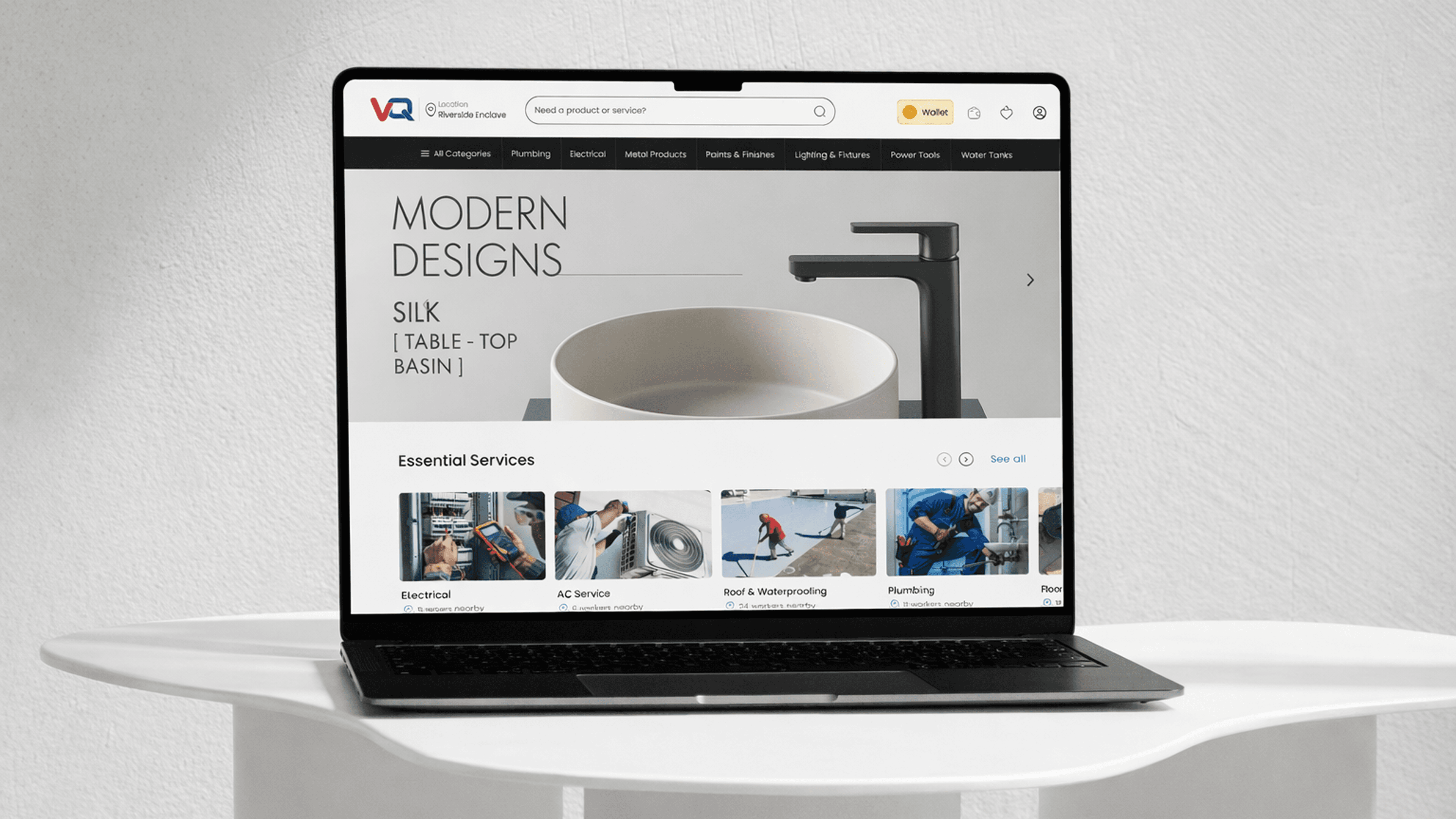
Enabled customers, service professionals, and franchises to operate seamlessly through one scalable construction ecosystem.
From scattered vendor calls and offline coordination to a single platform for purchasing materials and booking services.
The Problem wasn’t Demand. It was Coordination
Customers needed materials and services, but managing purchases, bookings, workers,
and franchises through disconnected channels slowed everything down.
What users were thinking
Where can I buy materials and book services together?
Who is handling my service request right now?
Why is tracking orders and jobs so unclear?
What the business was losing
Time spent coordinating across calls and messages
Service delays due to unclear ownership
Scalability because systems didn’t talk to each other
Where friction happened
Separate flows for product purchase and service booking
No shared visibility between customers, workers, and franchises
Manual updates for job and order status
Solution Break Down
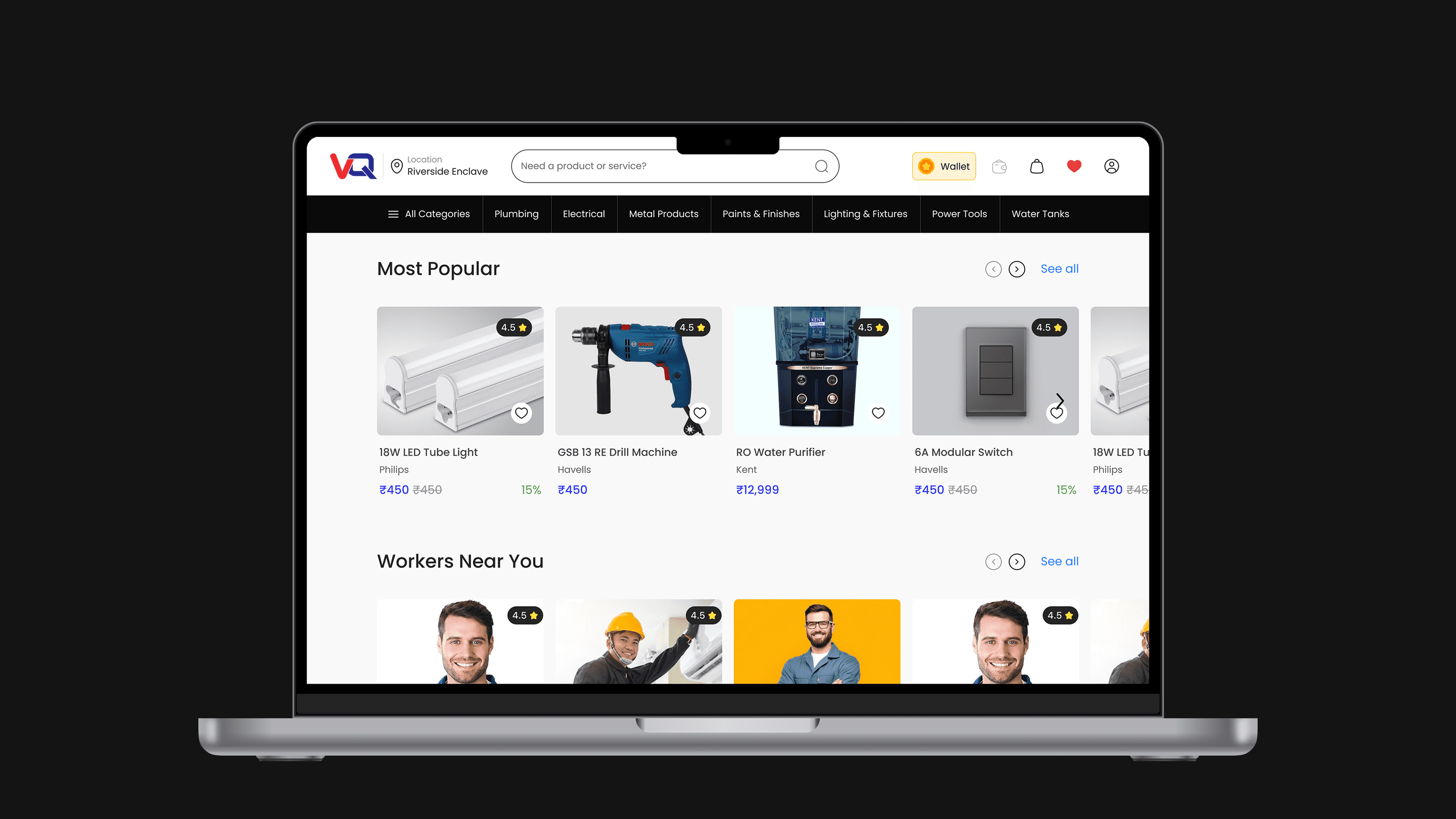
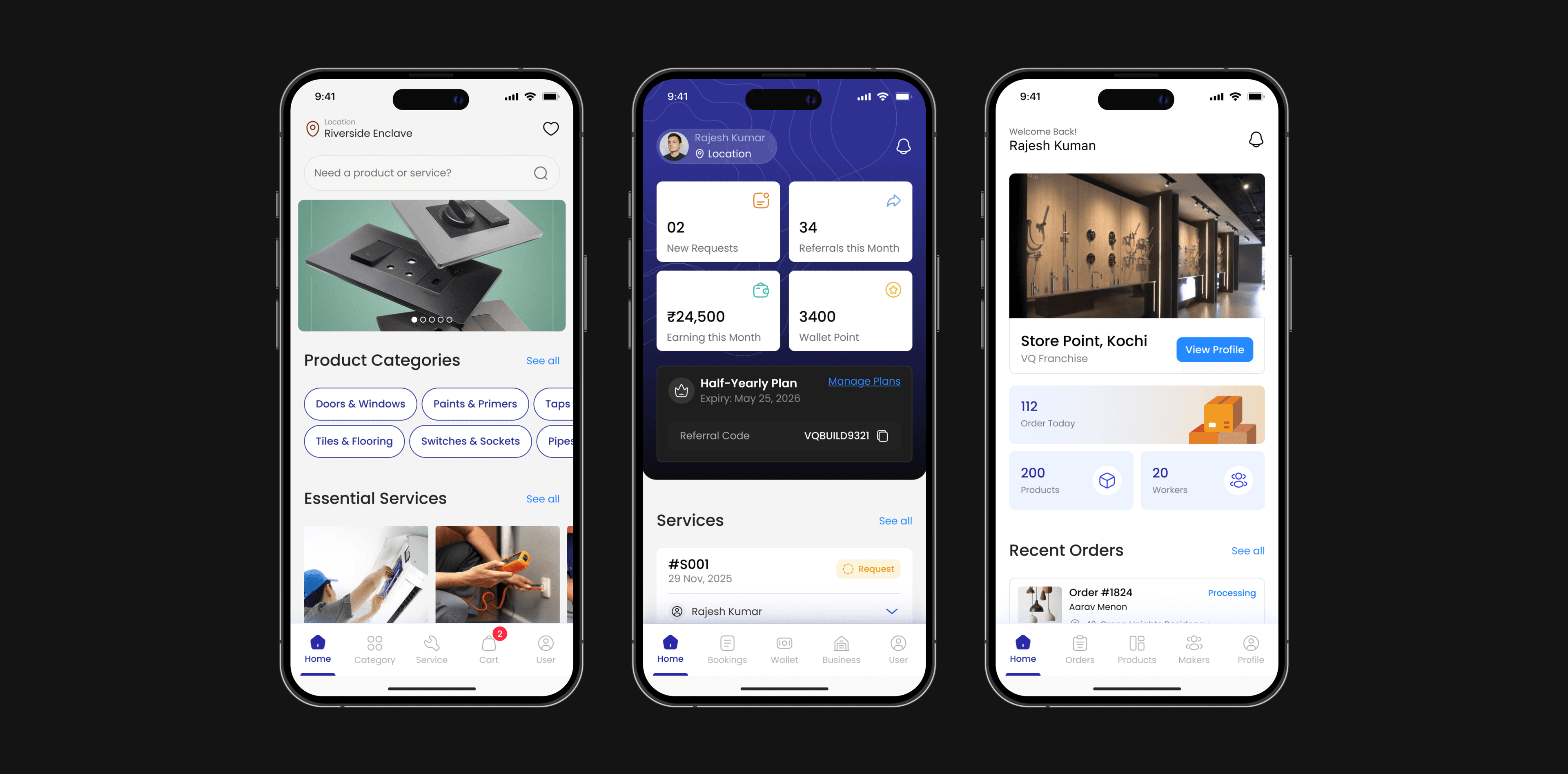
Unified Customer Platform for Products & Services
- Designed a single customer experience for buying materials and booking services
- Kept product purchase and service booking equally discoverable
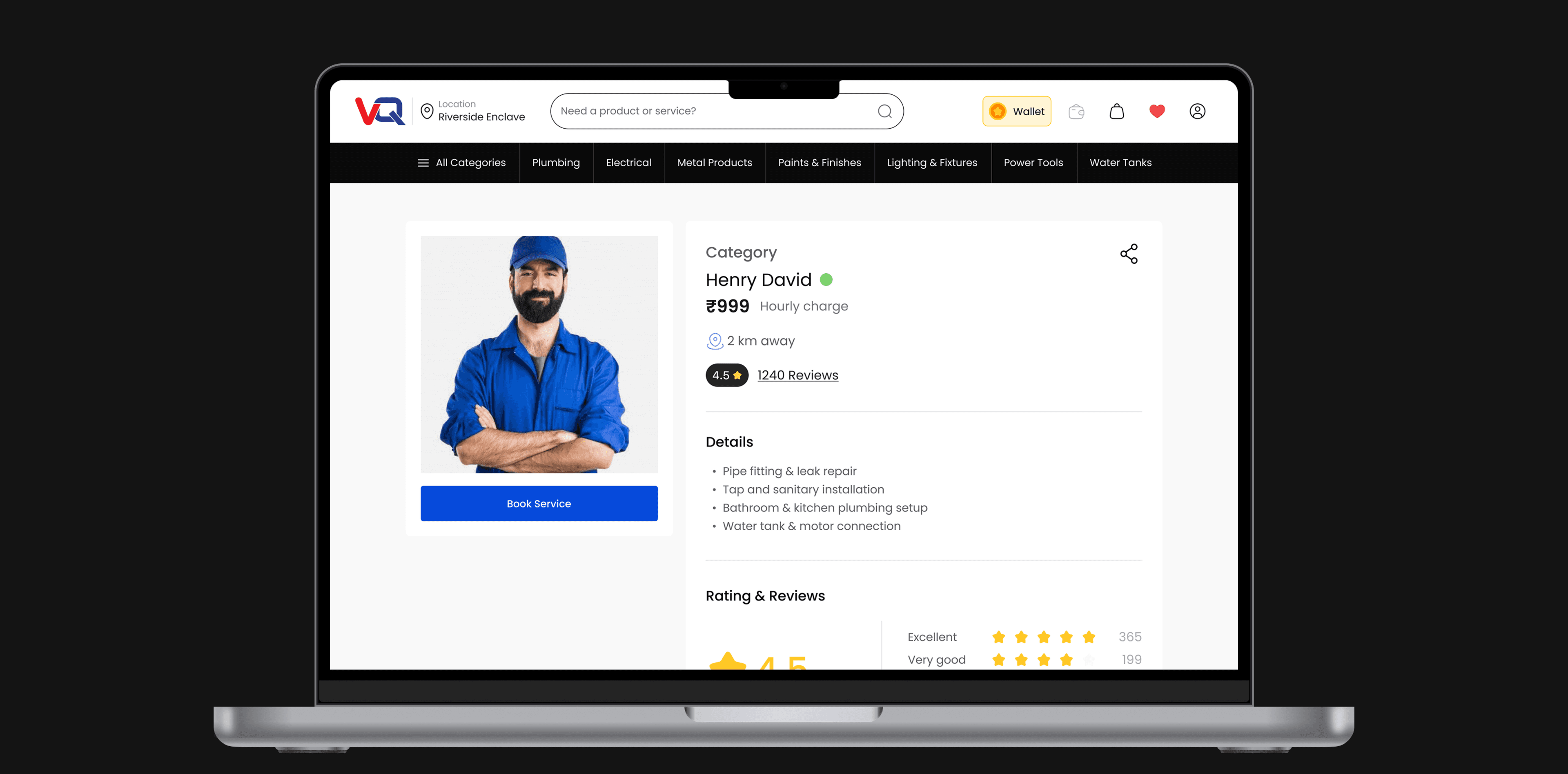
Service Booking With Clear Job Visibility
- Built structured service booking flows
- Displayed job status clearly after booking
VQ Pro App for Service Professionals
- Created a dedicated app for workers to view and manage assigned jobs
- Focused on job details, status updates, and task flow
Franchise App for Order & Job Management
- Designed franchise-level tools for managing orders and service allocations
- Provided visibility into both products and services
What Changed After Launch
Construction purchases and services became easier to manage
The platform felt ready to scale across regions
Clearer job and order statuses enable better role separation and faster service fulfilment workflows.
Coordination between customers, workers, and franchises improved
Problems We Solved
Designing multi-sided platforms
Connecting fragmented user journeys
Building scalable role-based systems
Reducing coordination overhead
Why This Matters for You
If you’re building a multi-role platform that combines commerce and services, this approach works.